English
- English
- Español
- Português
- русский
- Français
- 日本語
- Deutsch
- tiếng Việt
- Italiano
- Nederlands
- ภาษาไทย
- Polski
- 한국어
- Svenska
- magyar
- Malay
- বাংলা ভাষার
- Dansk
- Suomi
- हिन्दी
- Pilipino
- Türkçe
- Gaeilge
- العربية
- Indonesia
- Norsk
- تمل
- český
- ελληνικά
- український
- Javanese
- فارسی
- தமிழ்
- తెలుగు
- नेपाली
- Burmese
- български
- ລາວ
- Latine
- Қазақша
- Euskal
- Azərbaycan
- Slovenský jazyk
- Македонски
- Lietuvos
- Eesti Keel
- Română
- Slovenski
- मराठी
- Srpski језик
From Forming to Loading: Six Checkpoints in Glass Bottle Inspection
Glass bottles can fail in ways that are easy to miss. A hairline crack at the neck. A chip inside the mouth that only becomes visible when a closure is fitted. A mold seam that looks like a shadow until the bottle is held against a light box. Defects like these can leave the forming line unnoticed and only become apparent later, at the filling or packing stage, when correcting them is more costly.
What stands between these stages is not a single inspection but a sequence of checks positioned along the production and packing route. Each check has a different purpose. The following sequence reflects the inspection process used at HYT Packaging and the general quality control practices found among glass container manufacturers: manual visual inspection, automatic machine inspection, light-assisted examination, strength and performance testing, pre-packing inspection, and reinspection of packed cartons before shipment.
The sequence matters as much as the individual checks. Appearance and dimensional inspections take place while bottles are moving through production; strength testing is conducted on samples; decoration is evaluated after surface treatment; and carton inspection takes place after the bottles have been packed. A bottle can pass one stage and fail another, so no inspection should be omitted on the assumption that a later check will identify every missed defect.
Acceptance criteria are an essential part of the quality control system. The parties involved need to agree on who defines the criteria, which tolerances apply, and which approved sample serves as the reference. For most projects, these requirements should be documented in the order specifications before tooling and production begin. Changes made later can increase development costs and affect delivery schedules.
 1. Manual Inspection
Trained Eyes, Still Working Beside the Machines
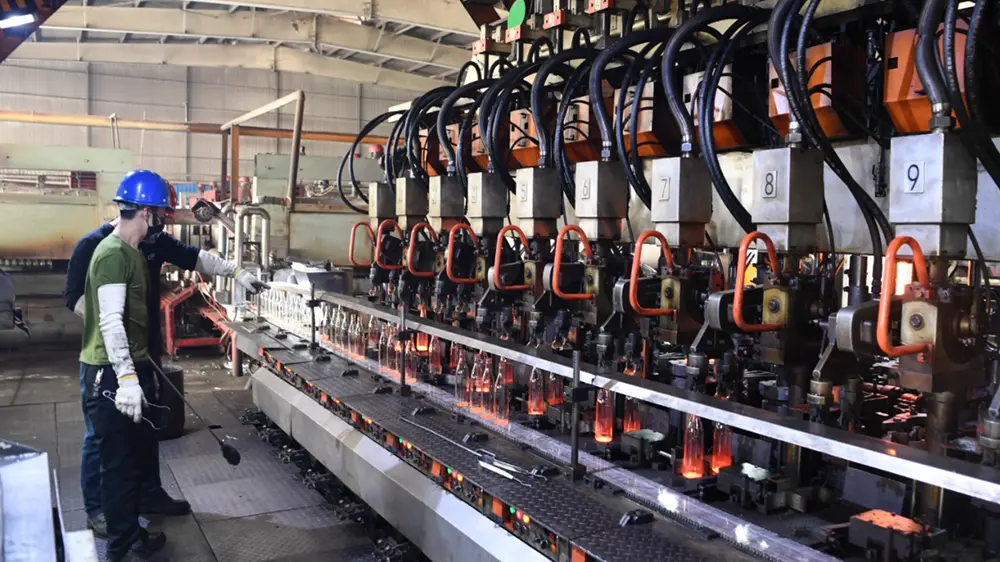
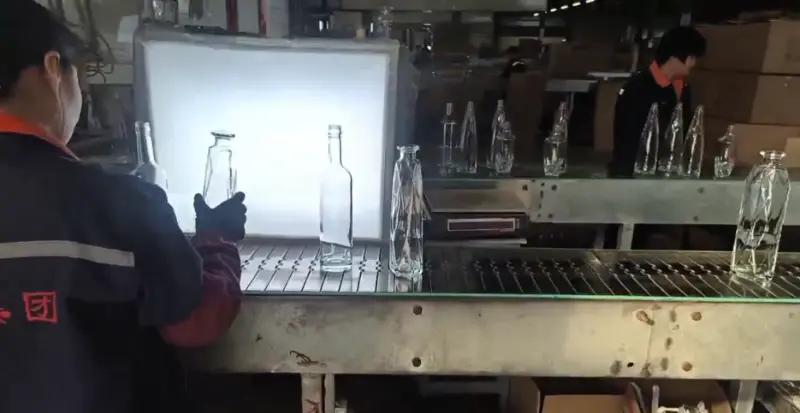
Manual inspection remains an important part of glass bottle quality control. Even in factories equipped with camera inspection systems and laser gauges, inspectors still examine bottles individually at the end of the conveyor. Some defects are difficult to identify through fixed detection rules, including scratches that become visible only at certain angles, slightly uneven shoulders, and mold seams that have not been completely removed.
Inspection focuses on five main areas: the mouth, neck, shoulder, body, and base. Each area has different potential defects. An out-of-round mouth may prevent a closure from fitting correctly. A chip around the neck can develop into a crack during filling. A deformed base may make the bottle unstable on a pallet or at the infeed of a filling line. Inspectors assess whether each bottle meets the physical and functional requirements defined in its specification.
Manual inspection also provides a level of judgment that automated equipment cannot fully replace. Experienced inspectors who work with the same bottle designs over time can recognize changes before they appear in reject statistics. These may include differences in light transmission through the glass, variations in handling characteristics, or subtle changes in shoulder shape. Such observations may not always appear in a formal control plan, but they can help identify developing production problems.
This stage also helps verify whether written specifications match the actual appearance of finished bottles. A drawing can define the acceptable size of a chip, but it cannot fully demonstrate how visible that chip will be on a finished bottle. Inspectors and customers can evaluate this more effectively by examining physical samples together and confirming the agreed appearance standards.
What it catches: Visible appearance and workmanship defects, assessed against the approved sample and agreed product specifications.
2. Automatic Machine Inspection
Consistency at the Speed of the Line
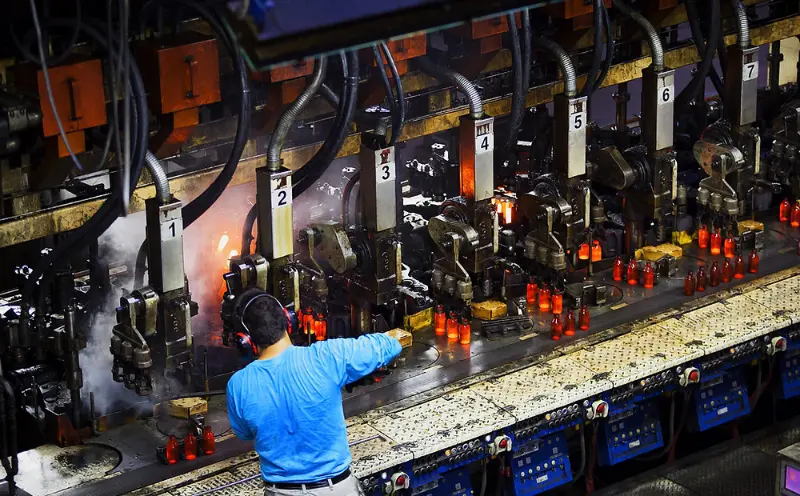
Where manual inspection provides human judgment, automatic machine inspection provides repeatability. Camera and sensor stations examine the features for which they have been configured, including dimensional tolerances, mouth finish, sidewall and base defects, cracks, and forming irregularities. Each bottle is evaluated against the same detection thresholds throughout the production run.
Defective bottles are generally rejected automatically and diverted from the conveyor before moving to the next production stage. This helps prevent defective glass containers from reaching the packing area, where a cracked bottle could damage neighboring bottles and the surrounding carton.
However, the detection capability of an inspection machine depends on its sensors, algorithms, and configuration. A defect outside the defined detection parameters may pass through the system, while excessively strict settings can result in unnecessary rejections. For this reason, machine inspection is best understood as a controlled screening process rather than a guarantee that every possible defect will be identified.
Production lines may use several inspection stations to cover different bottle characteristics. Their combined effectiveness still depends on equipment capability, detection sensitivity, and line configuration. As a result, two factories using similar inspection processes may achieve different detection and rejection results.
What it catches: Dimensional and structural defects at production speed, evaluated against predefined machine detection thresholds.
3. Light-Assisted Visual Inspection
What a Light Box Makes Visible
Some glass defects become easier to identify under controlled lighting. When a clear bottle is held against a bright background, features that may be difficult to see under ordinary factory lighting become more apparent. These include bubbles within the glass wall, stones and foreign inclusions, fine cracks extending from the base, uneven glass distribution, and surface waviness that may affect the appearance of the finished bottle.
The inspection method is well established, but the acceptance criteria need to be defined according to the intended application. Bubble size, quantity, location, inclusion type, and visibility thresholds may vary between projects. For example, defects that are noticeable on a transparent glass liquor bottle may be less apparent on a bottle with spray coloring, frosting, or engraved decoration.
Light-assisted inspection also has limitations. Defects located deep inside the glass wall or aligned parallel to the viewing angle may remain difficult to detect. Additional machine inspection or destructive sample testing may be necessary when these defects present a particular risk.
For this reason, acceptance criteria should be based on what the inspection method can actually verify rather than an unrealistic expectation of perfect transparency. A requirement that cannot be consistently checked through visual inspection may become a source of disagreement during product acceptance.
What it catches: Clarity, transparency, internal inclusions, and surface quality, assessed under controlled lighting against documented limits.
4. Strength and Performance Testing
Whether the Bottle Survives What Happens After It Is Filled
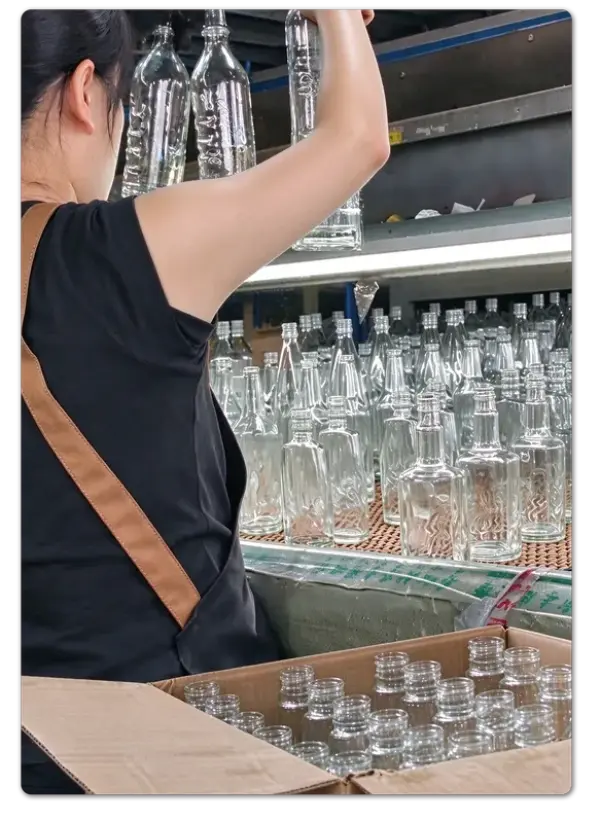
Appearance is only one part of glass bottle quality. A bottle that looks correct but fails under a capping head, inside a pasteurizer, or at the bottom of a stacked case is still unsuitable for its intended application. Performance testing helps evaluate these risks before the products reach the filling and distribution stages.
During testing, a defined sample is subjected to specified mechanical loads, internal pressures, or temperature changes. The results are then compared with the acceptance criteria established for the bottle design and its intended use.
Four testing categories cover many common requirements, although additional methods may be included when the application calls for them.
| Test Method | What the Test Measures |
|---|---|
| Vertical Load or Compression Testing | How much downward force the bottle can withstand under defined test conditions. |
| Internal Pressure Testing | Resistance to internal pressure, particularly for bottles intended to hold pressurized contents. |
| Thermal Shock Testing | Resistance to rapid temperature changes under specified testing conditions. |
| Other Specified Performance Tests | Additional mechanical or application-specific requirements defined in the order. |
The selection of test methods depends on the bottle design, glass specifications, intended application, and applicable acceptance criteria. Not every bottle requires the same combination of tests.
Test results apply to the samples examined rather than automatically certifying every bottle in a production batch. Sample size and selection are important parts of the testing method. A passing sample provides information about the manufacturing process and the tested products, but it should not be interpreted as proof that every unit in the lot has been tested individually. A test report should therefore identify the sample and the conditions under which the test was performed.
 It is also important to distinguish strength testing from hardness measurement. These methods use different equipment and evaluate different properties. A hardness result cannot be treated as a substitute for a mechanical strength test, and inspection reports should identify the actual method used.
What it catches: Mechanical and thermal performance issues, measured on defined samples against application-specific testing criteria.
5. Pre-Packing Inspection
The Last Look Before the Carton Closes
Packing is close to a one-way door in the production process. Once bottles have been counted, arranged, protected, and sealed inside cartons, identifying a defect becomes more complicated. Cartons may need to be reopened, quantities reconciled, and pallets rebuilt. Pre-packing inspection helps prevent nonconforming products from reaching this stage.
The inspection covers appearance, product specifications, quantity, and, where applicable, the quality of surface decoration.
For decorated glass bottles, the inspection checklist includes additional items:
- Logo position and print registration
- Color consistency across the production run
- Coating appearance and coverage
- Surface decoration quality
- Other decoration specifications agreed for the order
Decoration is an important part of the inspection process because the approved design and the quality criteria need to match. Printing, frosting, spray coloring, and engraving are normally specified during product development. Once a surface treatment becomes part of the approved design, its appearance and applicable tolerances should also be included in the acceptance criteria.
A decoration reference that has been approved visually but has no written tolerance can become a source of disagreement during final inspection. Documenting color, position, coverage, and acceptable appearance in advance makes the inspection process more consistent.
Packaging itself is also part of the check. Dividers, protective inserts, and carton configurations determine how well bottles are protected against movement and bottle-to-bottle contact during transportation. A carton that passes inspection at the packing table may still be vulnerable to transit damage if its internal arrangement does not provide sufficient protection.
What it catches: Product conformity, decoration quality, quantity, and packing readiness before cartons are sealed.
6. Pre-Shipment Inspection
 Reopening the Carton to Check the Carton
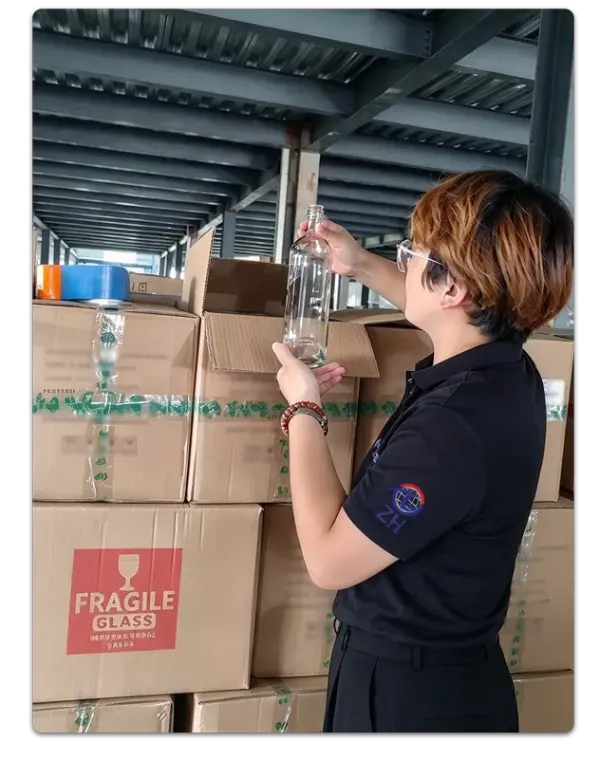
Pre-shipment inspection provides a second opportunity to examine products that have already passed earlier quality checks. Selected cartons are opened according to the agreed sampling plan. The bottles inside are rechecked for appearance, visible defects, product specifications, and decoration quality. Inspectors also examine the packing arrangement to confirm that the bottles remain properly positioned and protected.
This is the inspection stage that evaluates products in their actual shipping condition rather than their original production condition. It can identify handling damage, packing errors, and loading-related issues that may not have existed during earlier production inspections.
The number of cartons opened depends on the order requirements, shipment volume, product value, and agreed sampling plan. Different projects may use different sampling levels. What matters is that the inspection method and acceptance criteria are agreed upon in advance and applied consistently, so that a shipment approval or rejection can be supported by documented requirements rather than subjective judgment.
The result is an additional control point when the goods are already packed, labeled, stacked, and waiting for loading.
What it catches: Packed products and packaging conditions, rechecked against the agreed sampling plan before loading.
Inspection focus: Rechecking selected packed products, carton condition, and protective packaging before shipment.
Six Checks, One System
A Bottle That Reaches a Filling Line Has Passed Six Types of Inspection
Each inspection answers a different question. Does the bottle look right? Are its dimensions within tolerance? Is the glass optically clean? Can it withstand its intended service conditions? Does the decoration match the approved design? Has the product remained protected during packing?
No single stage covers all these requirements, and the inspection stages cannot replace one another. By the time a bottle is sealed inside a carton, most opportunities to correct production defects have already passed. This is why inspections carried out earlier in the manufacturing process are just as important as the final checks before shipment.
The effectiveness of the system depends on clearly documented acceptance criteria. Glass inspection involves practical decisions about acceptable bubble sizes, mold seam visibility, surface defects, and the number of defective bottles permitted within a sample. These requirements should be agreed upon between the customer and supplier before production begins, rather than discussed for the first time after delivery.
Suppliers that document project-specific inspection criteria and retain approved reference samples can maintain more consistent quality standards and reduce disagreements during product acceptance. For customized glass liquor bottle projects, these details are particularly important when bottle shape, glass clarity, surface treatment, and decoration all form part of the final specification.
This inspection structure is not unique to one manufacturer. It reflects a practical approach used across the glass container industry: defects can occur at different stages of production, and inspections placed at different points help identify problems that a single final inspection may miss.
HYT Packaging follows this multi-stage inspection approach, with inspection priorities determined by the bottle design, manufacturing process, and intended application.
For customers evaluating a glass bottle supplier, the more useful question is not simply how many inspections are performed, but whether each inspection has clear, documented acceptance criteria. Six checks with vague limits provide less assurance than a smaller number of checks supported by specific standards, defined sampling methods, and approved reference samples.
Related News
- What Makes the Long Neck Bellissima Glass Liquor Bottle with Bar Top Cork a Smart Packaging Choice
- Why Is a Ceramic Rooster Whiskey Decanter Bottle the Perfect Choice for Premium Spirits Packaging
- Why Is the 750ml Arizona Round Glass Spirit Bottle an Excellent Choice for Premium Spirits Packaging
- New Custom vodka Glass Bottle: HYT Packaging for a North American Spirits Brand
- Why Is a 1.75L Glass Liquor Jug with Handle the Smart Choice for Modern Beverage Packaging
- HYT Packaging Launches New Lightweight Flint Glass Spirits Bottle Line to Support Low-Carbon Beverage Brands
Leave me a message
New Products
News Recommendations