English
- English
- Español
- Português
- русский
- Français
- 日本語
- Deutsch
- tiếng Việt
- Italiano
- Nederlands
- ภาษาไทย
- Polski
- 한국어
- Svenska
- magyar
- Malay
- বাংলা ভাষার
- Dansk
- Suomi
- हिन्दी
- Pilipino
- Türkçe
- Gaeilge
- العربية
- Indonesia
- Norsk
- تمل
- český
- ελληνικά
- український
- Javanese
- فارسی
- தமிழ்
- తెలుగు
- नेपाली
- Burmese
- български
- ລາວ
- Latine
- Қазақша
- Euskal
- Azərbaycan
- Slovenský jazyk
- Македонски
- Lietuvos
- Eesti Keel
- Română
- Slovenski
- मराठी
- Srpski језик
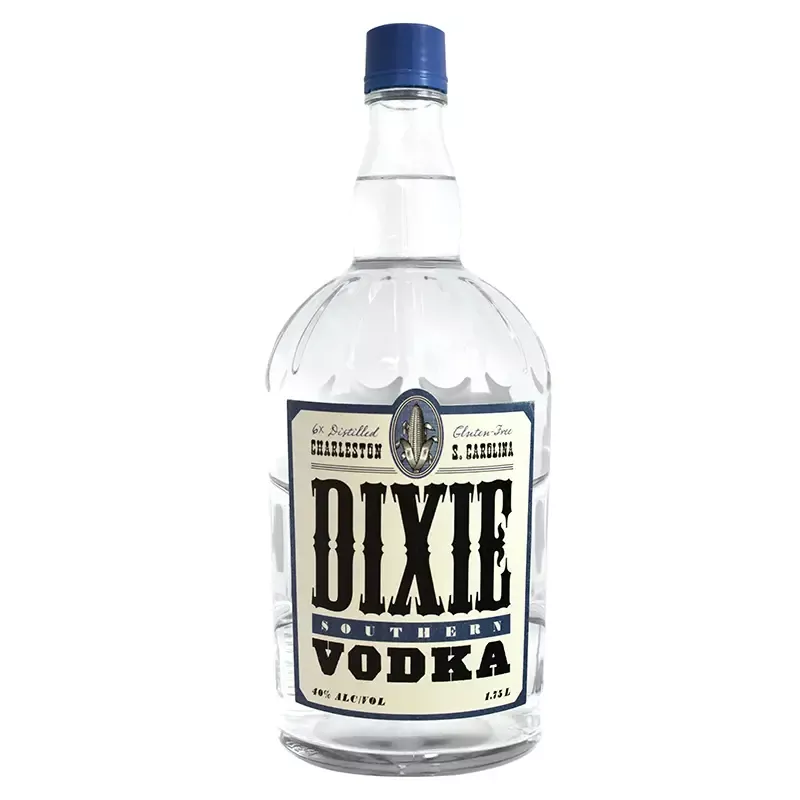
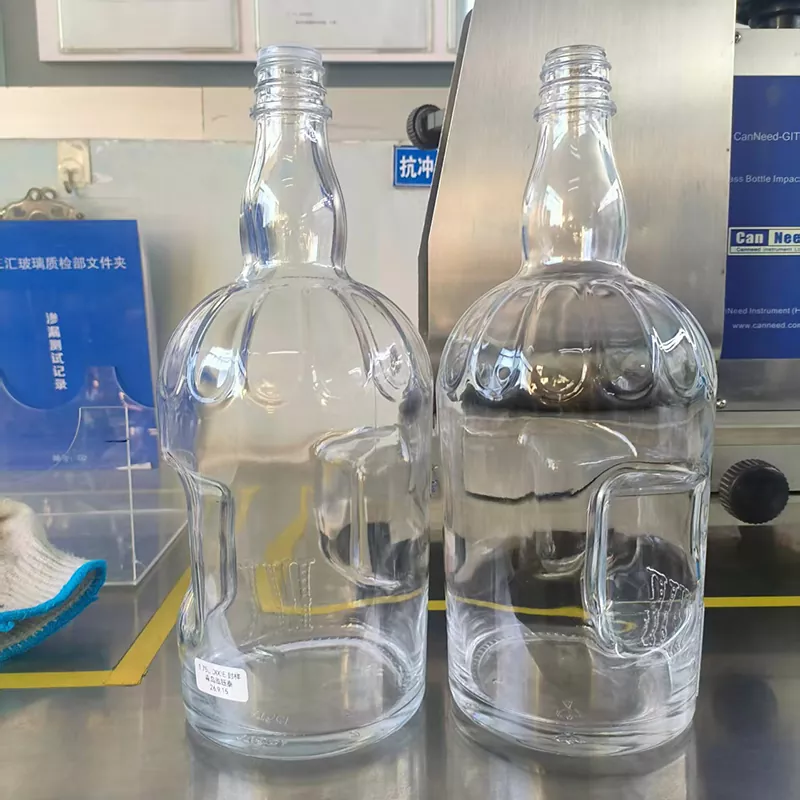
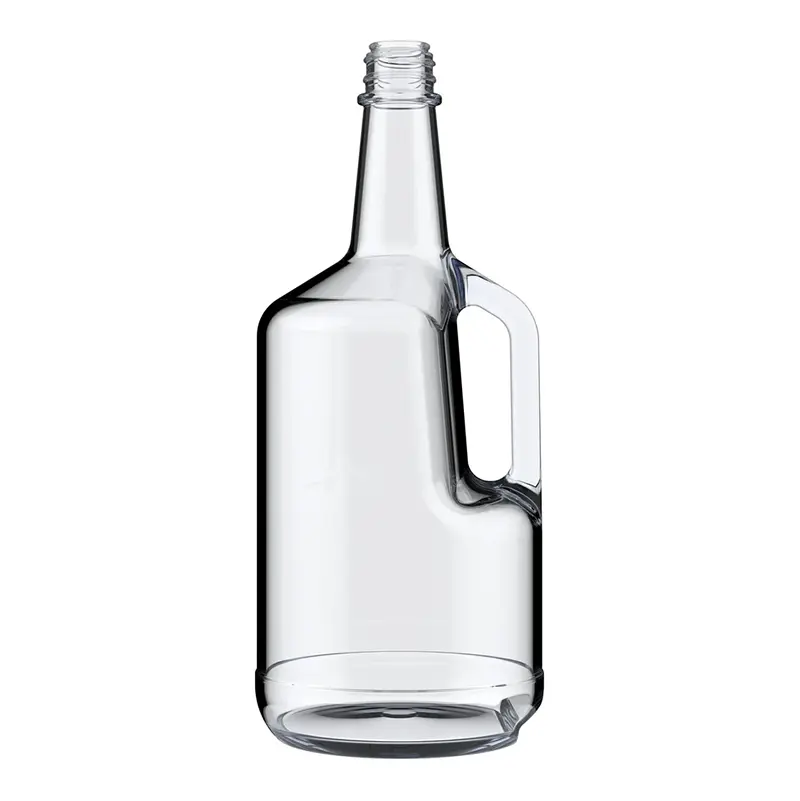
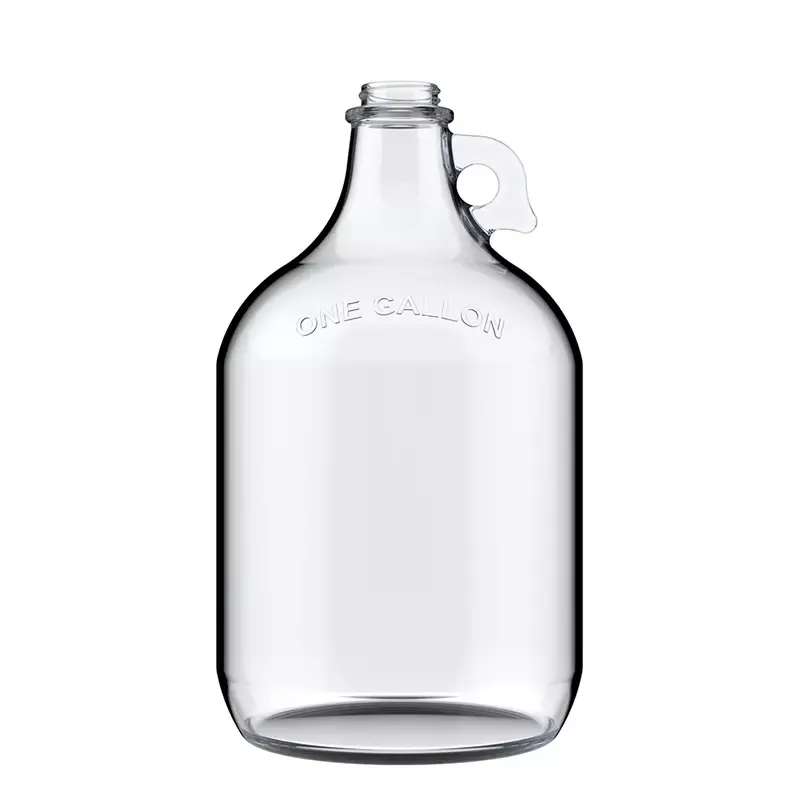
1.75L Pinch Grip Glass Spirits Bottle
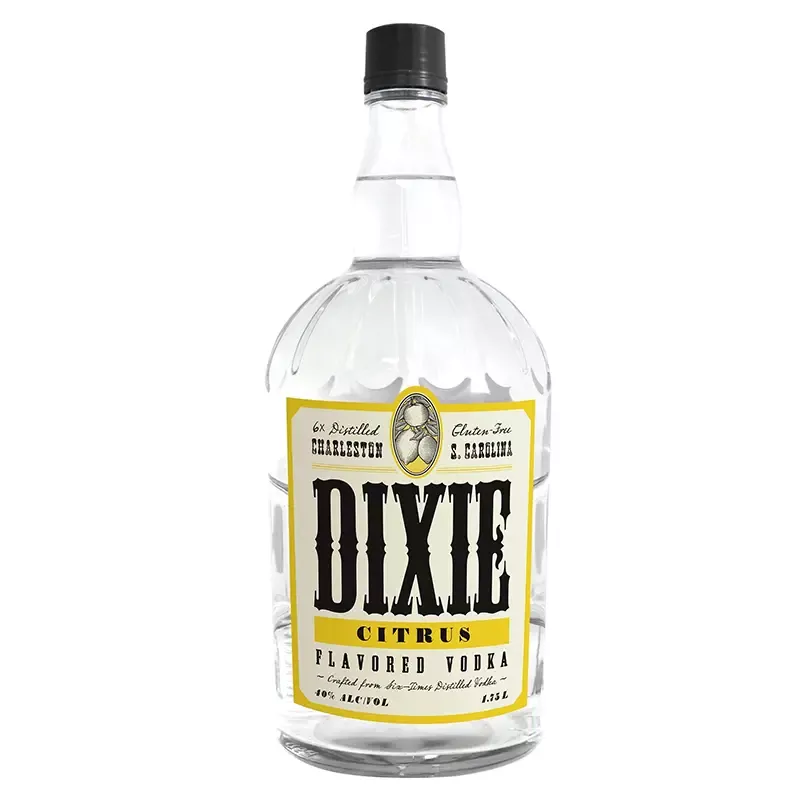
HYT Packaging supplies the 1.75L Pinch Grip Glass Spirits Bottle in bulk to distilleries, private-label producers and contract fillers. Why 1.75 litres? Simple maths. More liquid in every case means packaging takes a smaller bite out of the unit cost, and on the shelf the price looks sensible next to the smaller bottles beside it. Then there's when people drink it: parties, the home bar, gifts.
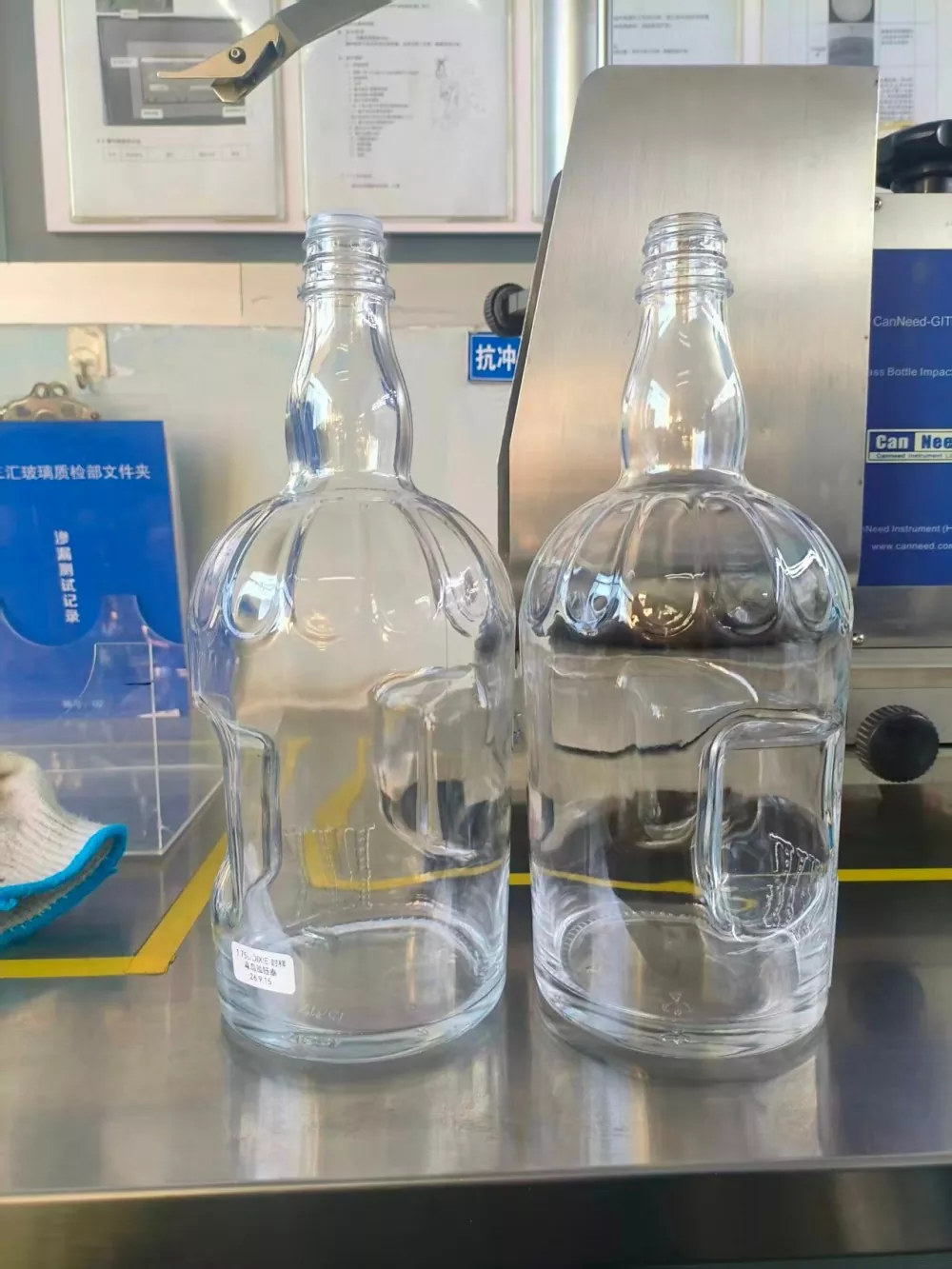
But big bottles are heavy bottles. At 2.8 kg, wet with condensation, a plain round wall gives your hand nothing to grab. So bottles slip — off the packing line, off the shelf, out of the shopping bag — and every slip can turn into a breakage claim. That's what the pinch grip ledge is for. It's moulded into the glass at the same spot on every single bottle, so your hand finds it every time, whether you're pulling it off a pallet, a shelf or the back bar.
The Pinch Grip, Explained
The grip is formed in the blank while the glass is hot, in the same blow cycle as the body. Nothing is glued on afterwards. No extra part, no extra failure point, no added cost per unit.
Consistency is the payoff. Every bottle offers the same hold, which matters for staff working fast and for a shopper lifting 2.8 kg one-handed.
Balance shifts too. With the hand on the pinch the bottle sits further forward, so the pour angle repeats and bar accuracy improves.
Glass Quality and How It Is Made
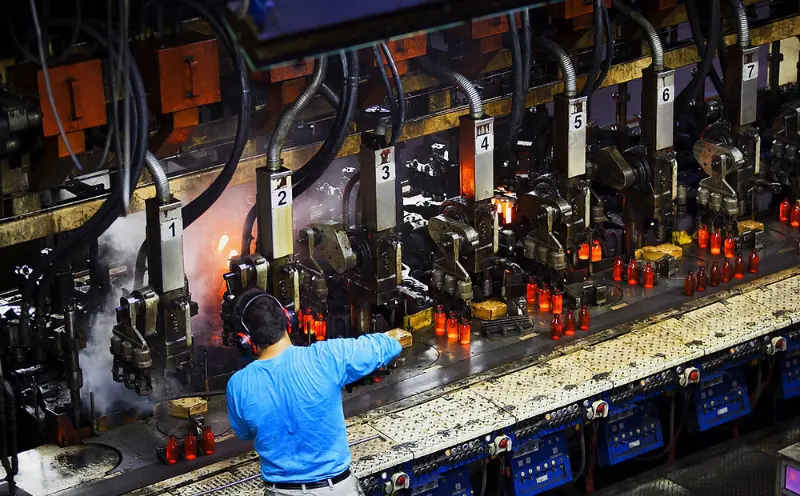
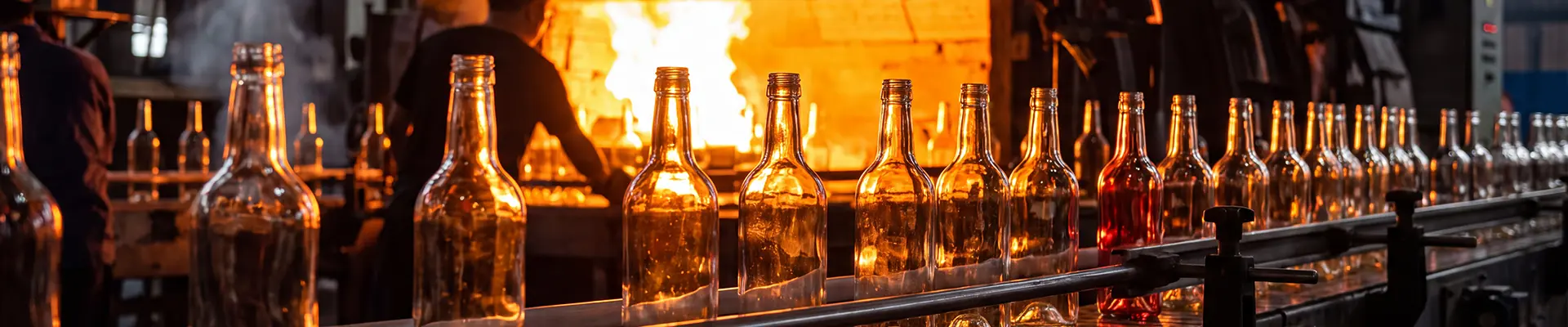
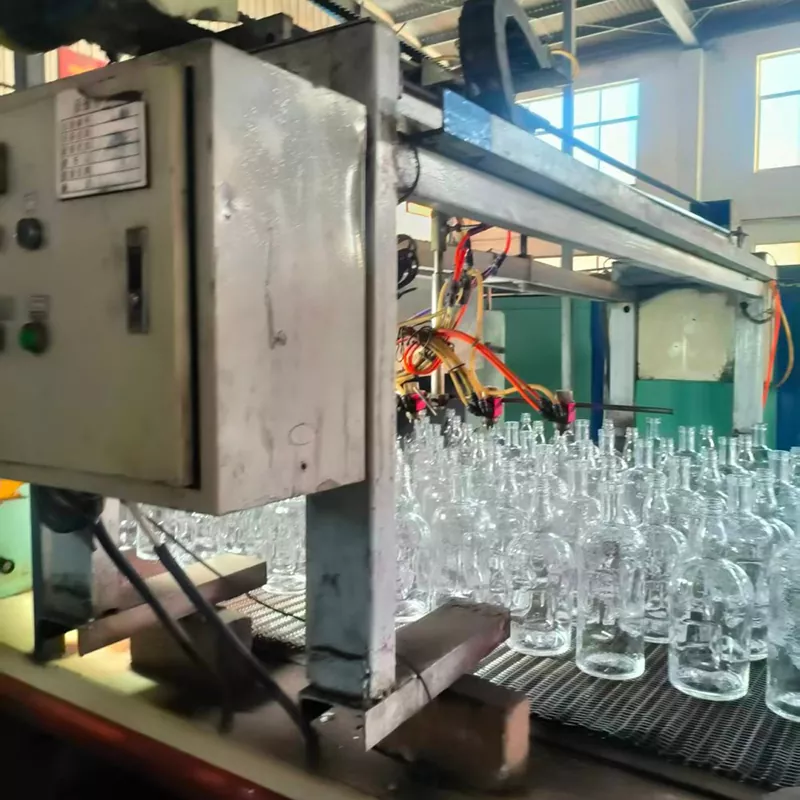
Food-grade flint glass, formed on IS machines and annealed through a lehr, so stress comes out before the bottle meets a filling line.
Base is flat. A filled bottle sits still on shelf and tracks straight through a label applicator. Wall thickness is held even across the body: enough glass for filling pressure, not so much that chip risk climbs when cases get set down.
Neck dimensions run to a tight tolerance. Most buyers review that line last. It becomes the only line that matters when a closure leaks because the thread ran out.
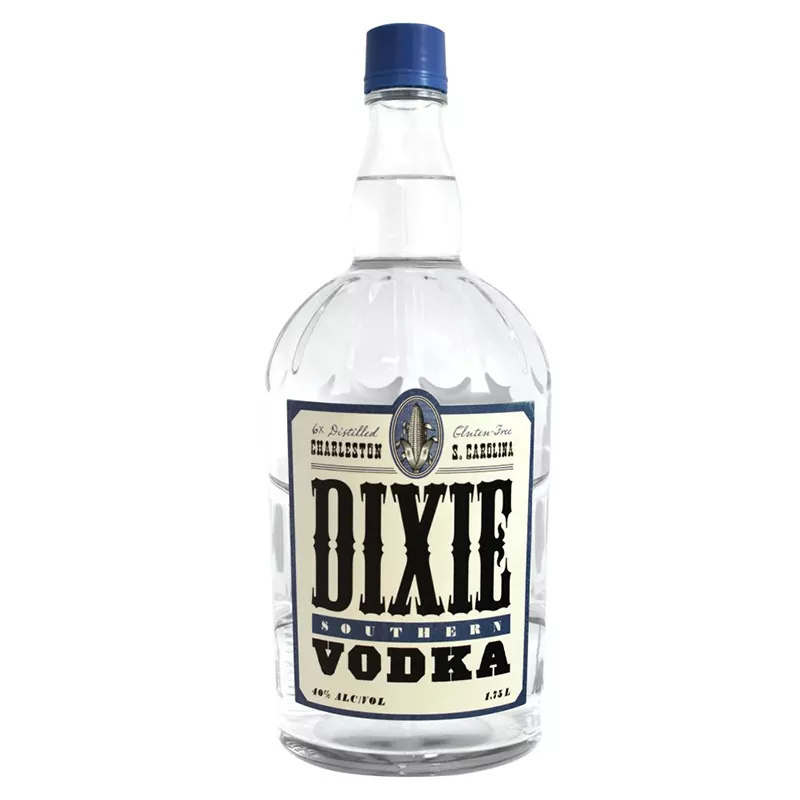
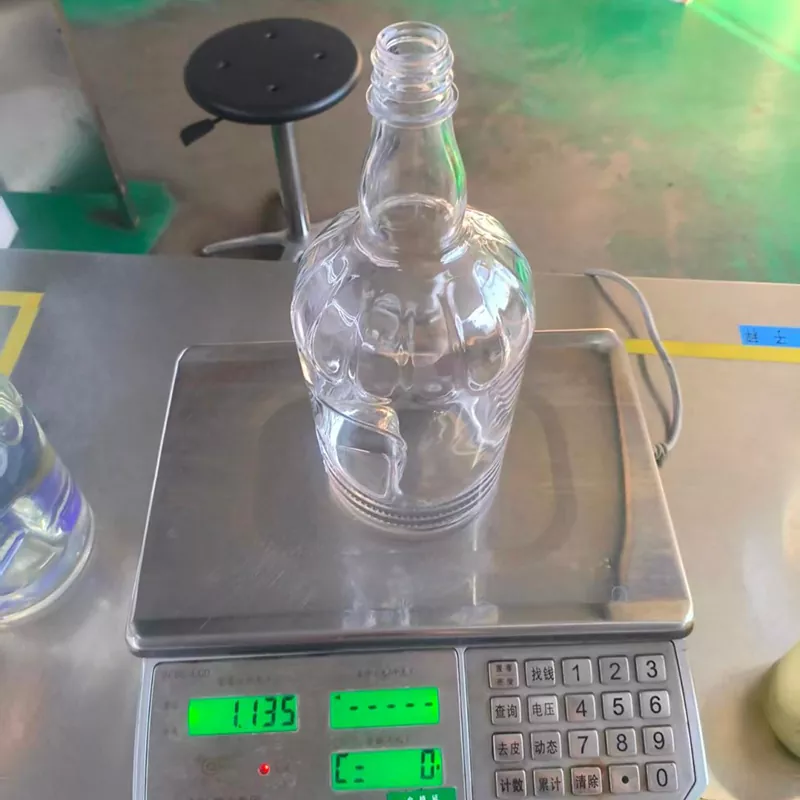
House weight on this body is 1,150 g. Every pallet count and freight estimate we issue comes off that figure, and repeat production holds it unless a buyer says otherwise. Want a heavier body? It can be quoted where hand weight is part of the brand. Lighter? That can be quoted where freight is the bigger cost. Either way, pallet weight and unit price get confirmed before the PO, not after.
Filling Line and Closure Compatibility
The 1.75L ships with a plastic screw cap as standard, and the cap sits inside the unit price. The same neck takes a T-cork or a bar stopper where a market needs one, quoted separately.
Standard filling, capping and labelling equipment runs it on a short changeover. No new tooling to buy.
Run one bottle first. A single unit through the conveyor shows guide rail clearance and star wheel alignment, a cheap test ahead of a full container. If the line handles heavier ware, say so at quotation, and guide spacing gets checked against the 2.8 kg filled weight before production is scheduled.
Bring the capping supplier in early. Torque and liner specification should be agreed before the PO. A closure cut for another thread will not perform on a tight neck, however the torque is set.
Sizes and Capacities
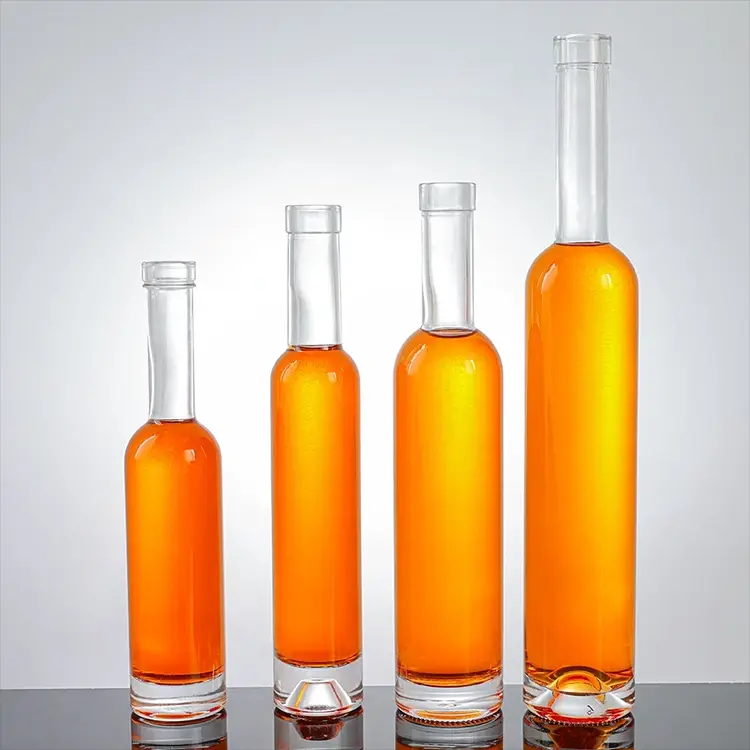
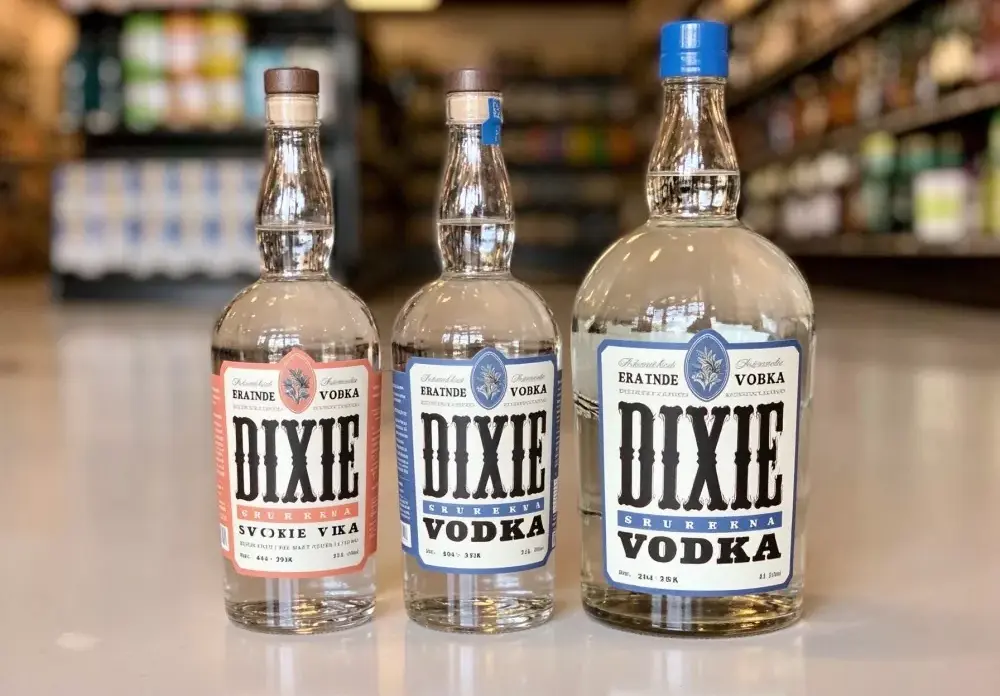
Three capacities on one platform: 750ml, 1L and 1.75L.
750ml covers standard retail shelf programmes. The 1L goes mostly to travel retail and mid-tier packs. The 1.75L Pinch Grip Glass Spirits Bottle sits at the top as the flagship unit.
Grip, neck and glass profile are shared. One closure specification covers all three, so the shelf reads as a family rather than three unrelated bottles. Capacity is measured to the fill line, not the rim, so the stated volume is what the bottle actually holds. A different fill level for one market gets confirmed at sampling.
Most buyers start with the 1.75L and add the smaller sizes once a channel proves itself. Taking all three from day one works too. It just means three MOQs and three decoration runs.
Glass vs PET and Other Large Formats
At this size the material decides the economics. Glass carries weight, and weight carries freight. It also recycles in established streams, does not react with the liquid, and gives the hand weight buyers read as premium.
PET ships cheaper. It also breathes over long storage and reads lighter on a premium shelf.
For a premium large-format spirits bottle, glass stays the right specification. The retail price the format can hold covers the freight.
Check the load maths before deciding. One 40HQ takes 441 bottles per pallet across 21 pallets, so 9,261 units. Switching to PET cuts freight per unit, then hands part of it back through damage rates.
Where It Fits Your Product Line
Clear spirits are where this bottle shines. Vodka, gin and white rum all put the liquid on display through the glass, and the grip ledge earns its keep when bartenders are pouring fast at events. The same maths runs through value packs and party sizes: more liquid in the bottle, no cut to the brand.
Then there are the places it shows up further out. Craft distilleries use it for seasonal releases. Importers build duty-free and club packs around it. House brands run one bottle shape across several labels. And venues pick it when they want a single unit to serve more guests.
Testing a new channel? Start with the 750ml or 1L, see how demand lands, then scale up to the 1.75L Pinch Grip Glass Spirits Bottle once the volume is there.
Specifications at a Glance
Current standard values are listed below. Any change is confirmed in writing before an order goes in.
|
Product Name |
1.75L Pinch Grip Glass Spirits Bottle |
|
Brand |
HYT Packaging |
|
Material |
Food-grade flint glass, lead-free |
|
Capacities |
750ml, 1L, 1.75L (same grip and neck standard across sizes) |
|
Glass Weight |
1,150 g per bottle, empty |
|
Full Bottle Weight |
2.8 kg with 1.75L fill and plastic screw cap |
|
Grip |
Molded pinch grip built into the body for one-handed handling |
|
Neck Finish |
Plastic screw cap standard on the 1.75L; same neck also takes T-cork or bar stopper |
|
Colour Options |
Flint (clear), plus spray coating, frosting or metallised finish |
|
Decoration |
Spray coating, frosted or metallised finish, label, decal, screen print, embossing |
|
Standard MOQ |
20,000 pcs |
|
Package |
Bulk pallet, shrink-wrapped trays or export cartons |
|
Units per Pallet |
441 |
|
Pallets per 40HQ |
21 |
|
Units per 40HQ |
9,261 |
|
Lead Time |
45 days from PO to last carton, excluding booking and vessel schedule; faster in low season |
Customization Options
Decoration on glass splits into surface and artwork.
Surface comes first. Spray coating matched to a brand colour. Frosting for a matte look. Metallised coating where the bottle has to sit inside a gift pack. Same body, different read on shelf.
Then artwork. Pressure-sensitive or wet-glue labels are the quickest, cheapest route to a new SKU. A decal sits closer to the glass and survives washing, which suits returnable programmes. Screen print covers simpler graphics on shorter runs. Spray decoration handles gradients and full-wrap colour that a label cannot.
The 1.75L ships with a plastic screw cap as standard, priced in. A T-cork or bar stopper fits the same neck and gets quoted on its own line.
New body or new grip means tooling. It is quoted separately and confirmed before commitment, so it never lands quietly inside unit price.
For most ranges, a label or decoration change is the cheapest way to add a SKU. Save the custom mould for a shape that stays in the range for years. Artwork approval, not glass, usually eats the calendar, so settle proofs early.
Quality Control
Every batch goes out against one benchmark: the approved sample. If what arrives doesn't match it, you get a replacement batch or a credit — simple as that.
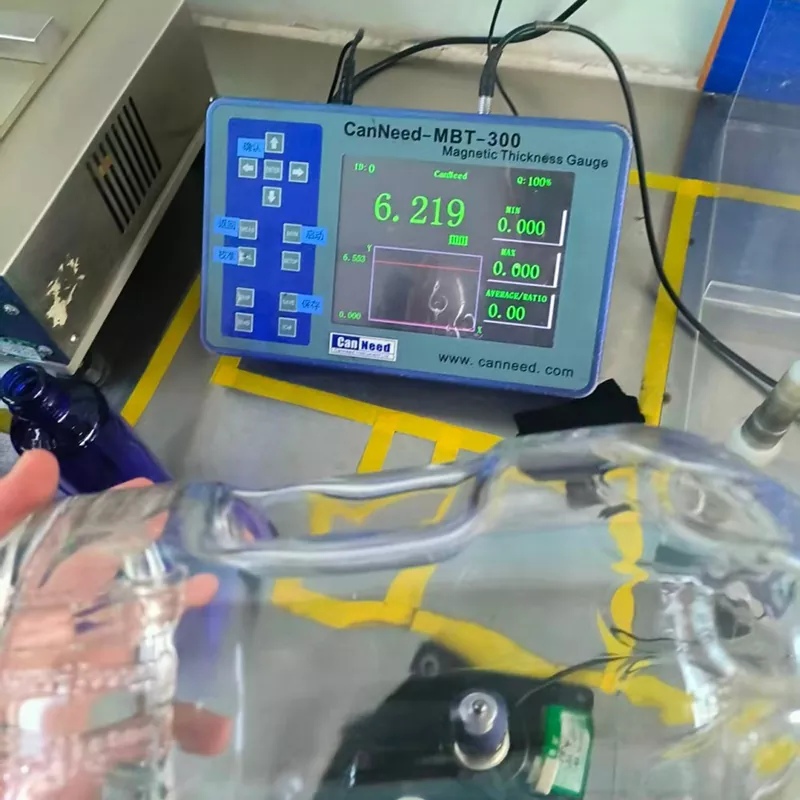
The checks are concrete. We confirm the bottles run on your filling line. We measure neck and grip dimensions against the drawing. Every unit gets a visual pass for stones, bubbles, cracks and thin walls. Annealing is verified so stress is properly relieved. And we weigh units against the 1,150 g target — because when weight drifts, your pallet counts shift and your freight costs move with it.
A failed batch never ships. Full stop. Instead, we report the cause, re-run or scrap the affected units, and reset the schedule. Pushing a non-conforming batch out the door to hit a date only costs more once it reaches you.
Repeat orders are where consistency shows. Colour and dimensions stay inside agreed limits, so run two sits on the shelf looking exactly like run one. Bringing in a new SKU? Pre-production samples reach your filling team first, before anything scales up. Test reports and material declarations — the paperwork customs and retail ask for — come with every shipment. And if you want a third-party inspection before loading, we host it on site.
Regulatory and Market Notes
Food-grade and lead-free. Food-contact documentation is matched to the destination market. The glass drops straight into established municipal recycling streams. Under extended producer responsibility schemes, a single-material bottle is far easier to document than a mixed pack — and recyclability data travels with every load.
Regulatory and Market Notes
Food-grade and lead-free. Food-contact documentation follows the destination market.
Glass recycles in established municipal streams. Under extended producer responsibility schemes, a single-material bottle is simpler to document than a mixed pack. Recyclability data ships with each load.
Packaging and Shipping for Heavy Glass
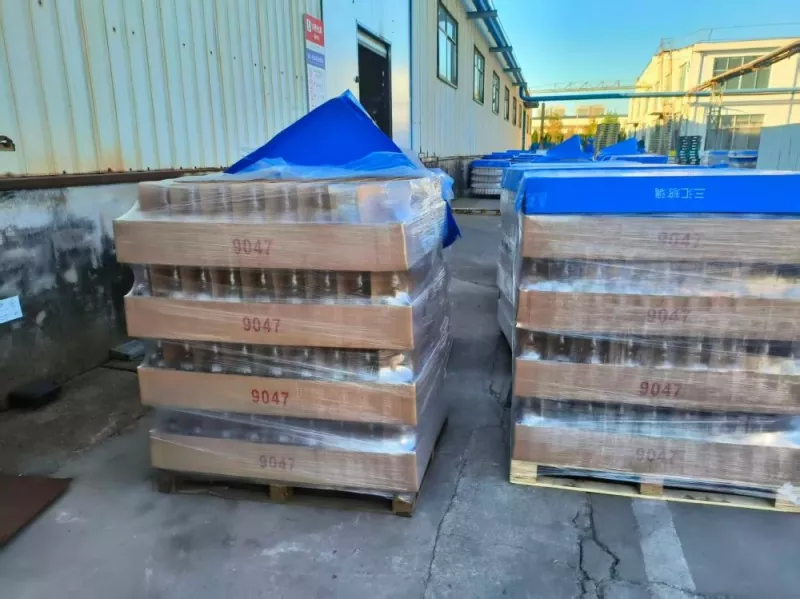
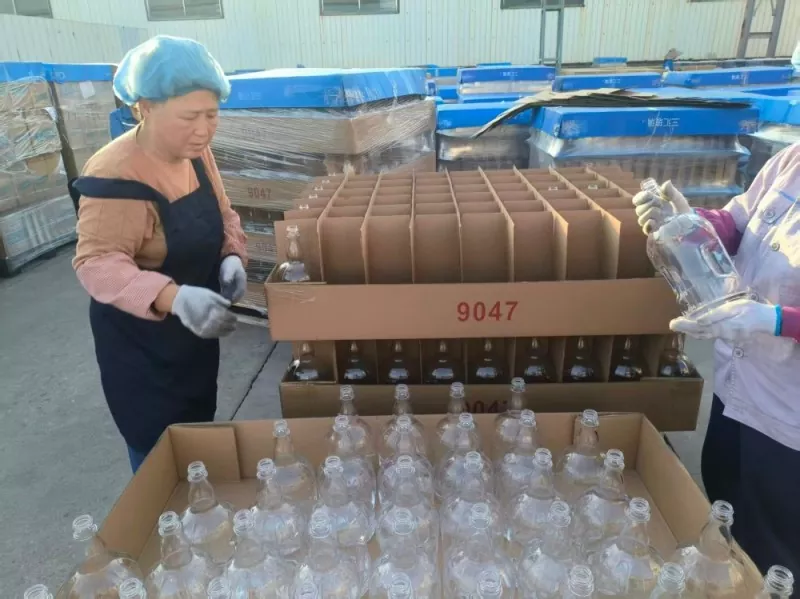
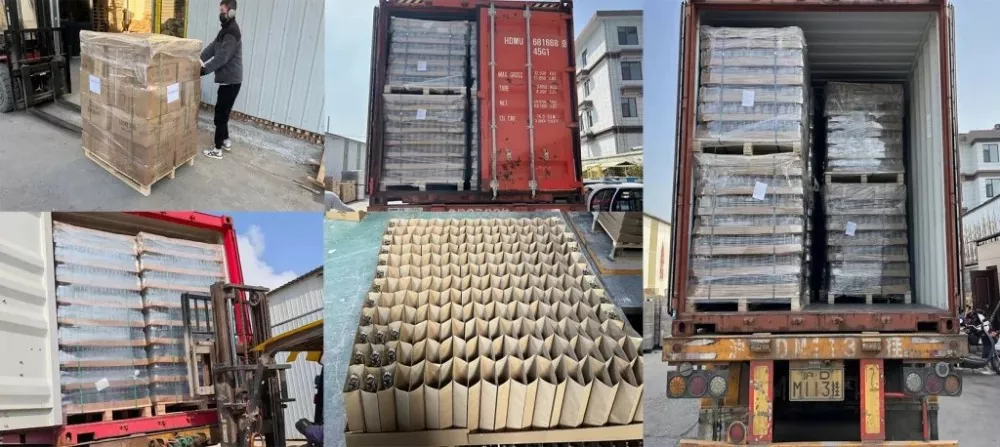
Packing specification is set at quotation for this weight class. Volume orders go bulk-palletised with layer pads and stretch wrap. Smaller loads go in export cartons with dividers.
Pallet count and container count are fixed before the order goes in, so freight starts from a known loading plan.
A full pallet carries 441 units and runs about 1.2 tonnes before pallet and wrap. Most warehouses will not stack that more than two high. Plan floor space before delivery, not on arrival.
Loading is out of Shenzhen and Guangzhou, on EXW, FOB, CIF or DDP terms. Ocean to major ports runs three to five weeks. Air exists for urgent restocks, at a cost hard to justify for glass.
Freight sits outside the unit price. Send the port or warehouse and a landed cost gets built. Packing choice moves that number more than most buyers expect at this weight.
Planning Your Volume and Container Load
One 40HQ: 21 pallets, 441 bottles each, 9,261 units. The 20,000 pcs MOQ lands slightly over two containers, so freight should be budgeted for that and not for one.
That figure holds for the 1.75L only. 750ml and 1L palletise differently, and a split order changes the count again. Confirm the split before freight gets quoted.
Pallet or carton is a commercial choice. Pallets cut packing cost. Cartons suit warehouses that break deliveries down by unit.
Repeat orders reuse the mould and the packing plan. The second run matches the first, and the receiving warehouse already knows the pallet.
Timing matters. Autumn launches collide with holiday spirit demand, when space and rates are worst. A summer PO buys a quieter slot and a steadier rate.
Ordering Process and Timeline
Getting started is simple. Send us your capacities, quantities, decoration and destination — and you'll have an itemised quote back within one business day. It breaks out everything: glass, decoration, packing, freight. No surprises.
Samples come before you commit, and the sample fee comes straight off your bulk order. Your kit includes one undecorated bottle, one decorated unit where specified, and a closure matched to the neck — so your team can trial the whole filling and capping sequence end to end before a single pallet is booked.
Frequently Asked Questions
Q1: Can different capacities be combined in one order?
Yes. MOQ applies per SKU, so each capacity needs its own quantity. Palletising and shipment can still go out as one load.
Q2: Will the bottle run on existing filling equipment?
On standard equipment, normally yes. A trial unit is still worth running first, since clearance problems usually start at the conveyor.
Q3: Which closure is supplied?
A plastic screw cap, standard on the 1.75L and included in the unit price. T-corks, synthetic corks and pour spouts fit the same neck. An existing closure can be checked against the neck specification before ordering.
Q4: Can branded decoration be applied?
Yes. Screen print, acid frost, decal and sand etch, each with a setup charge and a minimum run. A dieline template matching the body curve and grip goes to the design team.
Q5: How is breakage handled?
Bottles ship in dividers. Damage should be photographed with pallet counts at receiving, and the claim is processed jointly. Cargo insurance is worth carrying on full-container glass.
Q6: What are the payment terms?
Deposit on order, balance before shipment. Open account terms for established accounts only. Everything sits on the proforma.
Q7: Can the glass weight be changed?
Yes, within the limits of the mould. Standard body is 1,150 g and fills to 2.8 kg. Heavier improves drop resistance. Lighter cuts freight. Both get quoted before approval.
Q8: How quickly are samples issued?
Undecorated samples dispatch quickly. Decorated ones need artwork approval and setup, so they take longer. Sample freight is charged to the buyer.
Q9: How many bottles fit in a container?
441 units per pallet, 21 pallets per 40HQ, so 9,261 bottles. The 20,000 pcs MOQ is a bit over two containers. Smaller trial volumes can go LCL.
Send Inquiry
Contact Info
-
Address
No. 5, Yanshan Road, Laixi City, Qingdao City, Shandong Province, China
-
Tel
-
Looking for a reliable bottle packaging manufacturer and supplier in China?
Contact HYT Packaging for custom bottle design, sampling, production, decoration and packaging. Send your drawings, samples or requirements to discuss your project with our factory team.
News Recommendations