English
- English
- Español
- Português
- русский
- Français
- 日本語
- Deutsch
- tiếng Việt
- Italiano
- Nederlands
- ภาษาไทย
- Polski
- 한국어
- Svenska
- magyar
- Malay
- বাংলা ভাষার
- Dansk
- Suomi
- हिन्दी
- Pilipino
- Türkçe
- Gaeilge
- العربية
- Indonesia
- Norsk
- تمل
- český
- ελληνικά
- український
- Javanese
- فارسی
- தமிழ்
- తెలుగు
- नेपाली
- Burmese
- български
- ລາວ
- Latine
- Қазақша
- Euskal
- Azərbaycan
- Slovenský jazyk
- Македонски
- Lietuvos
- Eesti Keel
- Română
- Slovenski
- मराठी
- Srpski језик
Why Is a 1.75L Glass Liquor Jug with Handle the Smart Choice for Modern Beverage Packaging
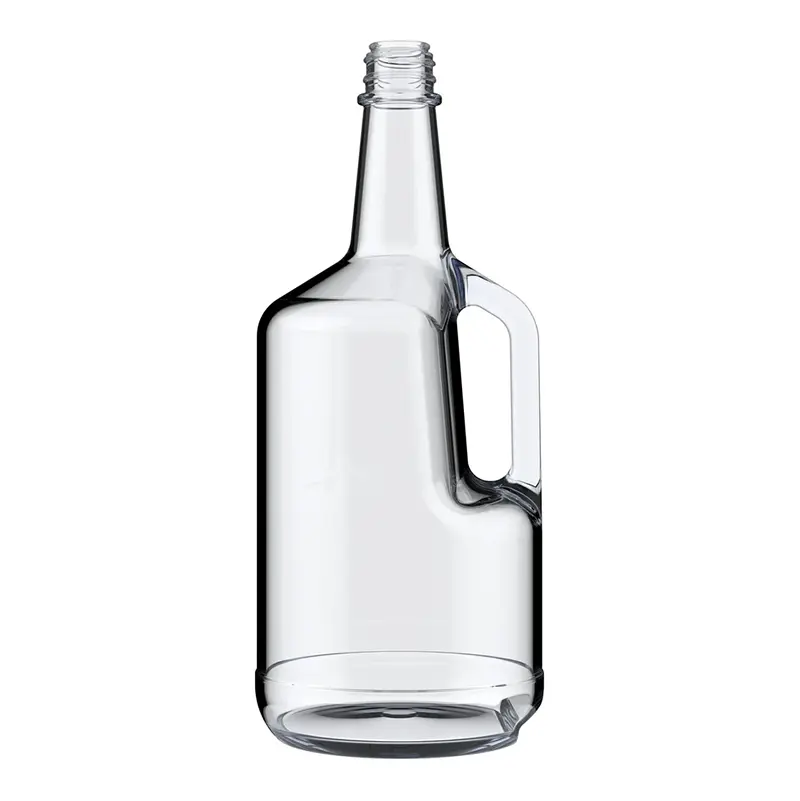
Choosing the right packaging is essential for beverage brands that want to combine product protection, convenient handling, and attractive retail presentation. A 1.75L Glass Liquor Jug with Handle offers an effective solution for large-volume spirits and other compatible liquid products. HYT, a professional glass packaging supplier, provides this practical packaging option with an integrated ergonomic handle, a precision threaded neck, a reinforced base, and clear glass construction. Designed for commercial bottling operations and retail distribution, this large-capacity glass jug helps brands improve packaging functionality while maintaining a clean and recognizable product appearance.
As consumer demand for convenient large-format packaging continues to grow, selecting a suitable glass container can influence everything from filling efficiency to customer experience. Understanding its design features, technical specifications, customization possibilities, and commercial applications can help beverage manufacturers make a more informed purchasing decision.
A 1.75L Glass Liquor Jug with Handle is designed for beverage brands, distilleries, wholesalers, and food producers that require reliable large-capacity packaging. Its integrated glass handle makes lifting and pouring more manageable, while its threaded neck supports compatible screw-cap closures. The existing-mold design can also help businesses reduce initial tooling investment and simplify product development. This article explores its key advantages, material characteristics, technical specifications, packaging applications, customization options, and important considerations when selecting a glass bottle manufacturer.
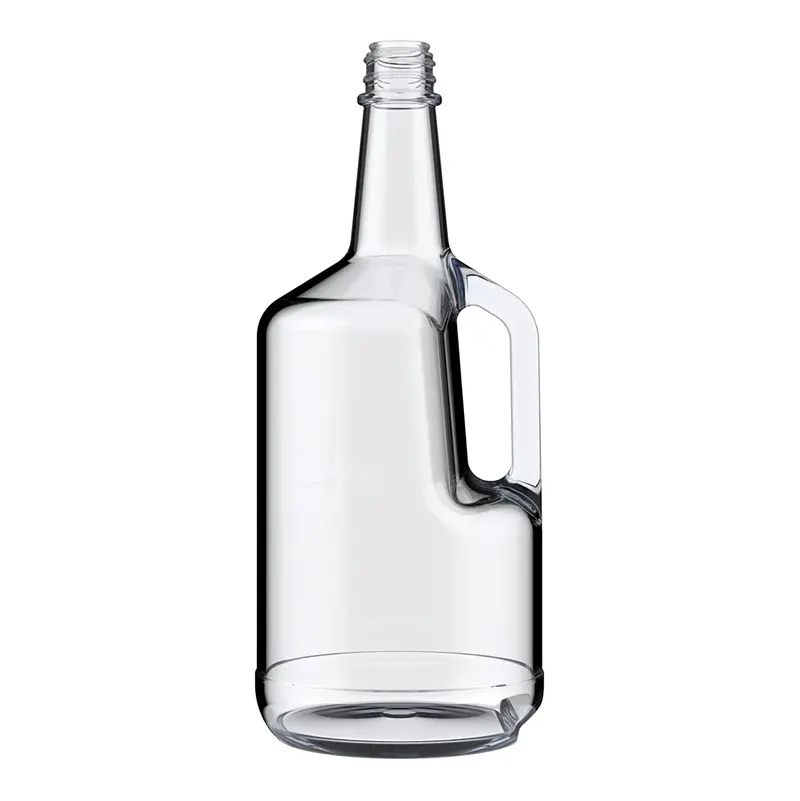
Table of Contents
1. What Makes a 1.75L Glass Liquor Jug with Handle Different?
2. Key Features That Improve Packaging Performance
3. Technical Specifications and Product Dimensions
4. Why Is the Integrated Handle Important?
5. What Liquids Can Be Packaged in This Glass Jug?
6. Customization Options for Beverage Brands
7. How to Choose a Reliable Glass Liquor Jug Supplier
8. FAQ About 1.75L Glass Liquor Jugs with Handles
9. Final Thoughts: Is This the Right Packaging Solution?
1. What Makes a 1.75L Glass Liquor Jug with Handle Different?
Large-format beverage packaging requires more than simply increasing bottle capacity. Manufacturers must consider handling convenience, structural design, closure compatibility, transportation requirements, and retail appearance.
A 1.75L Glass Liquor Jug with Handle combines a substantial liquid capacity with a practical side-grip design. Unlike conventional glass bottles that require users to hold the entire body, this jug incorporates a handle directly into its glass structure. This provides a dedicated gripping position when lifting, carrying, and pouring.
The 1.75-liter format is particularly recognizable in the North American spirits market, where large-volume bottles are commonly used for whiskey, vodka, rum, brandy, and other alcoholic beverages.
Several characteristics make this packaging format attractive to commercial buyers:
- Large-volume capacity: Provides a practical packaging format for value-size beverage products.
- Integrated handle: Offers a convenient gripping point when handling a relatively heavy glass container.
- Transparent appearance: Allows consumers to see the packaged liquid clearly.
- Threaded bottle neck: Supports compatible screw-cap closure systems.
- Existing mold availability: Helps avoid the need for developing a completely new bottle mold when the standard design meets project requirements.
For beverage companies looking to introduce large-capacity products without unnecessary packaging complexity, this design offers a practical starting point.
2. Key Features That Improve Packaging Performance
The performance of a glass liquor container depends on how its individual components work together. From the handle and bottle body to the closure and base, every structural detail contributes to the overall packaging experience.
2.1 One-Piece Integrated Glass Handle
One of the most distinctive features is the integrated handle. It is formed as part of the glass body rather than attached using adhesive or a separate connecting component.
This construction eliminates a separate glued connection and provides a continuous glass structure around the handle area. Its practical advantages include:
- A dedicated gripping position for lifting and carrying.
- More manageable pouring of large liquid volumes.
- A distinctive appearance compared with conventional bottles.
- Reduced dependence on separately attached handle components.
Although the integrated structure improves handling functionality, glass remains a breakable material. Appropriate inspection, careful handling, and protective transportation packaging are still essential.
2.2 Crystal-Clear Glass Appearance
Glass transparency plays an important role in beverage presentation. Clear glass allows customers to observe the liquid's color and visual characteristics without opening the container.
The transparent appearance is suitable for spirits brands that want their packaging to communicate product clarity and quality. It also provides a clean background for product labels, logos, and decorative elements.
2.3 Precision Threaded Neck
The bottle features a threaded neck designed for compatible screw-cap closures. A properly matched closure helps protect the contents during storage, distribution, and everyday use.
For commercial packaging projects, buyers should confirm the neck dimensions, cap specifications, liner material, and sealing requirements before beginning mass production.
2.4 Reinforced Flat Base
A stable bottle base is particularly important for large glass containers. The reinforced flat-bottom design provides a supporting surface for upright placement during filling, storage, transportation, and retail display.
Combined with suitable protective packaging, the base design contributes to more practical handling throughout the distribution process.
3. Technical Specifications and Product Dimensions
Before selecting a glass packaging solution, purchasing teams should evaluate its dimensions, weight, opening specifications, and capacity. These details influence filling equipment compatibility, packaging design, transportation costs, and warehouse storage arrangements.
The following table summarizes the main specifications published for HYT's 1.75L Glass Liquor Jug with Handle.
| Technical Parameter | Specification |
|---|---|
| Product Name | 1.75L Glass Liquor Jug with Handle |
| Nominal Capacity | 1.75L / 1750ml |
| Material | Glass |
| Glass Color | Clear |
| Height | Approximately 30.5 cm |
| Body Width / Diameter | Approximately 12.5 cm |
| Product Weight | Approximately 1150 g |
| Neck / Mouth Diameter | Approximately 35 mm |
| Handle Construction | One-piece integrated glass handle |
| Closure Type | Compatible threaded screw cap |
| Mold Type | Existing public mold |
| Surface Decoration | Custom printing and frosting options |
| Typical Applications | Spirits, syrups, gourmet oils, and compatible beverages |
Note: Specifications should be reconfirmed with HYT before ordering. Bottle capacity, dimensions, closure compatibility, and production tolerances should be verified against the latest technical drawing and approved sample.
For buyers operating automated bottling lines, it is especially important to evaluate the bottle's overall dimensions and neck finish. These factors can affect filling nozzles, capping equipment, labeling systems, and case-packing arrangements.
4. Why Is the Integrated Handle Important?
Handling convenience becomes increasingly important as bottle capacity increases. A filled 1.75-liter glass container can be relatively heavy, making its gripping structure an important part of the overall design.
The integrated handle addresses this requirement by creating a dedicated contact point between the user and the container.
4.1 Better Lifting Convenience
The handle provides a defined gripping area, allowing users to lift the jug without wrapping their entire hand around the glass body. This can make carrying large-volume containers more manageable in retail, hospitality, and household environments.
4.2 More Controlled Pouring
Pouring from a large bottle requires appropriate leverage and balance. The side handle gives users a practical position from which to control the tilting movement.
This is particularly useful when dispensing whiskey, rum, syrup, or cooking oil into smaller serving containers. However, users should always support the jug appropriately and avoid excessive force.
4.3 Improved Packaging Identity
The handle also creates a recognizable silhouette. Compared with ordinary cylindrical glass bottles, a handled jug has a more distinctive visual profile that can help a product stand out on supermarket shelves and liquor store displays.
4.4 Practical Considerations for Shipping
The handle affects the overall external dimensions of the bottle. Therefore, packaging engineers should consider the handle opening, protruding profile, and distance between adjacent containers when designing shipping cartons.
Suitable carton partitions and protective packaging can help minimize glass-to-glass contact during transportation.
5. What Liquids Can Be Packaged in This Glass Jug?
Although the product is primarily designed for large-format liquor packaging, its potential applications extend to several other compatible liquid products.
5.1 Whiskey, Vodka, and Rum
Distilled spirits are among the most recognizable applications for 1.75-liter handled glass bottles. Whiskey, vodka, rum, and brandy producers can use this format for value-size retail products and bulk beverage distribution.
Transparent glass allows the natural color of the spirit to remain visible, while custom labels provide space for brand identity, product information, and legally required labeling details.
5.2 Brandy and Other Specialty Spirits
Large-capacity packaging can also suit selected specialty spirits and liqueurs. The bottle's appearance can be adapted to different positioning strategies through labeling and surface decoration.
5.3 Maple Syrup and Gourmet Oils
Beyond alcoholic beverages, the jug can also be considered for compatible food products such as maple syrup and infused cooking oils.
These products benefit from transparent packaging because consumers can directly observe the liquid's appearance. Before filling, manufacturers should verify chemical compatibility, food-contact requirements, closure suitability, and storage conditions.
5.4 Ready-to-Drink Beverages
Selected ready-to-drink beverage products may also use large-format glass packaging. However, the product's formulation, filling temperature, pressure conditions, and closure requirements must be evaluated before application.
Typical target customers include:
- Craft distilleries and independent spirits producers.
- Large beverage manufacturers and bottling companies.
- Private-label liquor brands.
- Maple syrup and gourmet oil producers.
- Beverage packaging wholesalers and distributors.
- Retail brands supplying supermarkets and online marketplaces.
6. Customization Options for Beverage Brands
Standard bottle designs provide a convenient packaging foundation, but brand differentiation often requires additional customization. Surface decoration, label design, and closure selection can transform a standard glass jug into packaging that reflects a company's market positioning.
6.1 Custom Labels
Labels are one of the most accessible ways to establish brand recognition. The broad front-facing body area provides space for logos, product names, descriptions, and other relevant information.
When designing labels, brands should consider:
- Available flat labeling space.
- Label dimensions and placement.
- Adhesive compatibility with the glass surface.
- Moisture and handling conditions.
- Applicable market-specific labeling requirements.
6.2 Screen Printing and Decorative Finishes
For businesses seeking a more distinctive appearance, several decoration methods may be considered depending on the bottle design and production requirements.
| Decoration Method | Main Characteristics | Potential Application |
|---|---|---|
| Screen Printing | Direct printing of graphics onto the glass surface | Brand logos and product information |
| Frosting | Creates a translucent, textured appearance | Premium beverage presentation |
| Adhesive Labeling | Flexible artwork and information presentation | Retail branding and product identification |
| Laser Engraving | Creates decorative markings on compatible glass surfaces | Special branding and decorative details |
The availability and suitability of each process should be confirmed with the manufacturer during the design and sampling stage.
6.3 Matching Screw Caps
Closure selection is another essential part of customization. HYT offers compatible screw-cap options, including metal screw caps with PE foam liners.
When selecting a closure, buyers should evaluate:
- Thread specifications and dimensional compatibility.
- Seal performance and liner material.
- Filling and capping equipment requirements.
- Storage and transportation conditions.
- Regulatory requirements for the target market.
Combining the bottle and matching closure into one packaging solution can simplify supplier coordination and product development.
7. How to Choose a Reliable Glass Liquor Jug Supplier
Finding a suitable glass bottle supplier involves more than comparing unit prices. Commercial buyers should evaluate product consistency, customization capabilities, communication efficiency, packaging protection, and order flexibility.
The following considerations can help purchasing teams make a better decision.
7.1 Evaluate Existing Mold Availability
Developing a new glass bottle mold can require additional investment, sampling, and production preparation. Choosing an existing-mold product may reduce these initial requirements when its design already meets the project's specifications.
HYT's 1.75L handled jug uses an existing public mold, offering an alternative for businesses that do not require a completely exclusive bottle structure.
7.2 Request Samples Before Bulk Purchasing
Physical samples allow buyers to inspect the bottle's appearance and functionality before committing to a larger order.
Important inspection points include:
- Overall shape and dimensional consistency.
- Glass surface quality and visible defects.
- Handle construction and gripping comfort.
- Bottle base stability.
- Thread finish and screw-cap compatibility.
- Labeling and decoration suitability.
7.3 Check Production and Packaging Capabilities
For international buyers, protective packaging is an important consideration. Large glass bottles require appropriate separation and cushioning to reduce the possibility of damage during transportation.
Ask suppliers about carton partitions, pallet arrangements, loading methods, and export packaging specifications.
7.4 Confirm Minimum Order Quantities and Delivery Schedules
Order requirements can vary according to inventory, customization, and production arrangements. Buyers should confirm minimum order quantities, sample availability, stock status, and estimated delivery schedules before finalizing procurement.
7.5 Consider Long-Term Supply Consistency
For beverage brands with ongoing production requirements, consistent bottle dimensions and closure compatibility are particularly important. Working with a supplier that can communicate technical details and coordinate packaging requirements can help simplify future replenishment orders.
HYT provides glass packaging solutions covering bottle design, sampling, production, decoration, and packaging. Buyers can also explore its glass liquor bottle collection to compare additional packaging formats.
8. FAQ About 1.75L Glass Liquor Jugs with Handles
Q1: What is a 1.75L Glass Liquor Jug with Handle mainly used for?
A: It is primarily used for packaging large-volume spirits such as whiskey, vodka, rum, and brandy. Depending on product compatibility and food-contact requirements, it can also be considered for maple syrup, gourmet oils, and selected beverage products.
Q2: What are the advantages of an integrated glass handle?
A: An integrated handle provides a dedicated gripping position for lifting, carrying, and pouring. Because it is formed as part of the glass body, it avoids the need for a separate glued handle connection.
Q3: What is the capacity of this glass liquor jug?
A: The nominal capacity is 1.75 liters, equivalent to 1750 milliliters. Buyers should confirm the actual filling capacity and technical specifications with the manufacturer before placing an order.
Q4: What are the dimensions of HYT's 1.75L glass jug?
A: The published specifications indicate an approximate height of 30.5 cm, a body width of 12.5 cm, a weight of 1150 g, and a neck or mouth diameter of 35 mm. The latest technical drawing should be used for final packaging design.
Q5: Does the bottle come with a screw cap?
A: HYT offers two purchasing options: an empty glass jug or a complete set with compatible metal screw caps and PE foam liners. The preferred configuration should be confirmed when requesting a quotation.
Q6: Can I customize the appearance of the glass jug?
A: Yes. Depending on the project requirements, customization options may include adhesive labels, screen printing, laser engraving, and frosting. Buyers can discuss artwork, decoration methods, and available labeling areas with HYT.
Q7: Does this product require a new mold?
A: No new mold is required when the existing public-mold design meets the buyer's specifications. This can help reduce initial tooling investment and shorten the development process compared with creating a completely new bottle design.
Q8: Is the glass jug suitable for food and beverage packaging?
A: It is intended for compatible food and beverage applications. Buyers should confirm the relevant food-contact documentation, product compatibility, closure materials, and applicable regulations for their target markets.
Q9: How should large glass jugs be packaged for international shipping?
A: Protective export cartons with individual partitions can help separate bottles and reduce direct contact during transportation. Pallet stabilization and suitable loading arrangements should also be considered to minimize movement and impact damage.
Q10: How can I obtain a quotation from HYT?
A: Buyers can contact HYT through its official website and provide the required quantity, bottle specifications, closure preferences, decoration requirements, and destination market. The sales team can then discuss availability and suitable purchasing arrangements.
9. Final Thoughts: Is This the Right Packaging Solution?
Selecting the right large-capacity glass packaging can influence product presentation, handling convenience, operational compatibility, and distribution efficiency. A 1.75L Glass Liquor Jug with Handle combines a practical integrated handle, clear glass appearance, threaded neck, and substantial capacity in one recognizable packaging format.
For distilleries, beverage manufacturers, private-label brands, and wholesale distributors, the existing-mold design provides a practical option when developing or expanding large-format liquid products. Additional decoration and compatible closure options also create opportunities to align the packaging with different brand identities and market requirements.
As an experienced glass packaging supplier, HYT offers support for bottle selection, customization, sampling, production, and packaging coordination. Whether you are sourcing large-capacity whiskey bottles, developing a private-label spirits line, or exploring alternative glass packaging for gourmet liquids, choosing a suitable manufacturing partner is an important step toward a successful product launch. Contact HYT today to discuss your packaging requirements, request product details, and receive a competitive quotation. Visit the official website or contact us to explore how the right glass packaging solution can support your next beverage project.
Related News
- New Custom vodka Glass Bottle: HYT Packaging for a North American Spirits Brand
- HYT Packaging Launches New Lightweight Flint Glass Spirits Bottle Line to Support Low-Carbon Beverage Brands
- How Can a Long Neck Bellissima Glass Liquor Bottle with Bar Top Cork Elevate Your Beverage Brand
- Qingdao HYT's Century-Long Legacy in Custom Glass Packaging
- How Custom Glass Bottles Are Reshaping the Premium Rum Landscape
- Custom Spirit Bottle Design: From Concept to Manufacturing and Decoration
Leave me a message
New Products

News Recommendations