English
- English
- Español
- Português
- русский
- Français
- 日本語
- Deutsch
- tiếng Việt
- Italiano
- Nederlands
- ภาษาไทย
- Polski
- 한국어
- Svenska
- magyar
- Malay
- বাংলা ভাষার
- Dansk
- Suomi
- हिन्दी
- Pilipino
- Türkçe
- Gaeilge
- العربية
- Indonesia
- Norsk
- تمل
- český
- ελληνικά
- український
- Javanese
- فارسی
- தமிழ்
- తెలుగు
- नेपाली
- Burmese
- български
- ລາວ
- Latine
- Қазақша
- Euskal
- Azərbaycan
- Slovenský jazyk
- Македонски
- Lietuvos
- Eesti Keel
- Română
- Slovenski
- मराठी
- Srpski језик
How Can a Long Neck Bellissima Glass Liquor Bottle with Bar Top Cork Elevate Your Beverage Brand
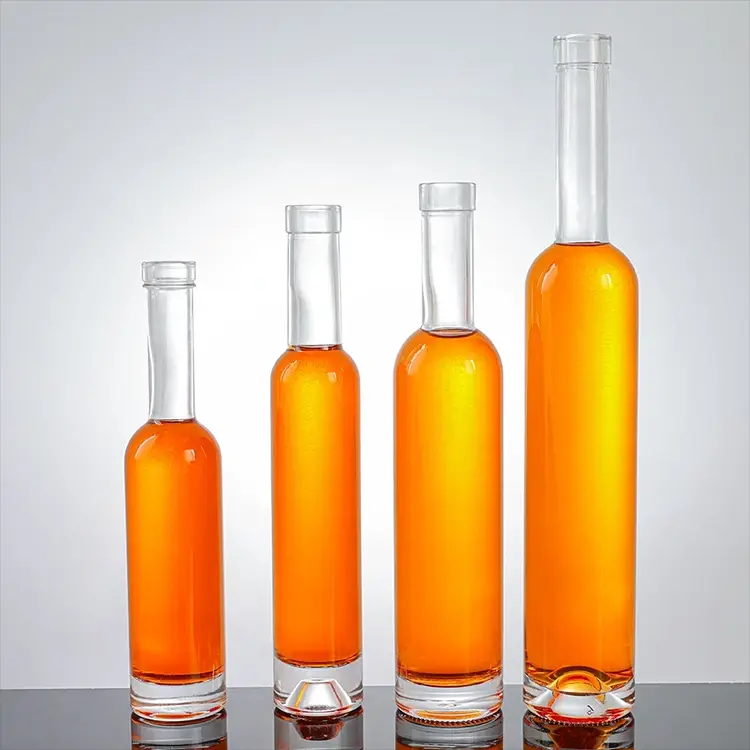
HYT offers the Long Neck Bellissima Glass Liquor Bottle with Bar Top Cork, a distinctive packaging solution for brands seeking a refined appearance, clear glass presentation, and a practical closure design. Available in 200ml, 375ml, and 500ml capacities, this bottle is suitable for selected ice wines, dessert wines, port, and specialty liqueurs. Its elongated silhouette and super flint glass help beverage producers create packaging that looks elegant on retail shelves, in gift collections, and in hospitality settings.
Choosing a liquor bottle involves more than selecting a container. Shape, capacity, glass clarity, closure compatibility, labeling, and shipping requirements all influence the final packaging result. The Long Neck Bellissima Glass Liquor Bottle with Bar Top Cork combines a slender neck, straight-sided body, and clear super flint glass with three capacity options. This guide explains its main features, suitable applications, capacity selection, closure considerations, customization opportunities, and purchasing checklist for beverage brands and wholesale buyers.
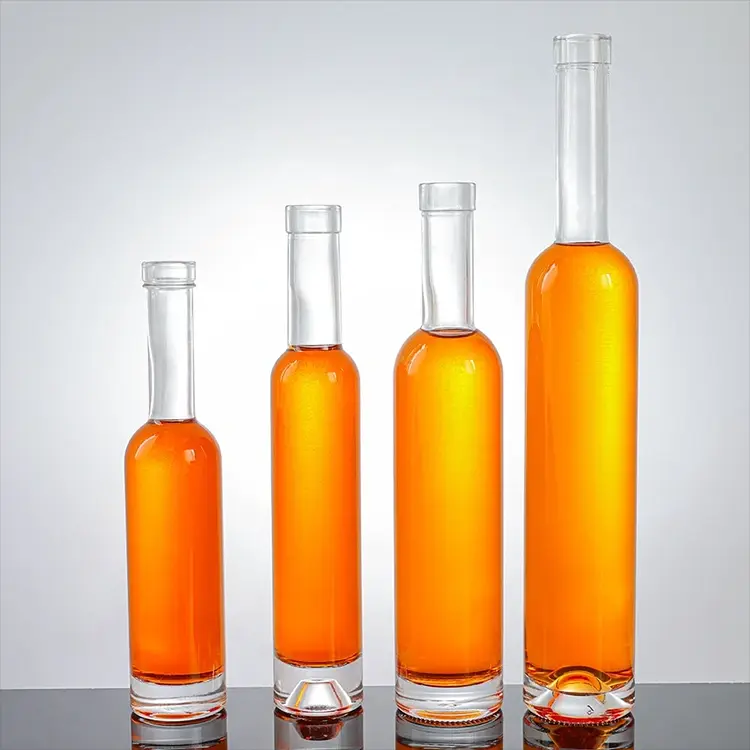
Table of Contents
- What Makes the Bellissima Bottle Design Distinctive?
- Why Does Super Flint Glass Matter?
- Which Bottle Capacity Is Right for Your Product?
- What Beverages Can Use This Bottle?
- How Should You Choose a Compatible Bar Top Cork?
- How Can Customization Strengthen Brand Identity?
- What Should Wholesale Buyers Check Before Ordering?
- Frequently Asked Questions
- Conclusion: Choosing the Right Glass Liquor Bottle
1. What Makes the Bellissima Bottle Design Distinctive?
The Bellissima bottle is recognizable for its long, narrow neck and elongated, straight-sided body. Compared with conventional short-neck liquor bottles, this silhouette creates a taller visual profile that can help a beverage stand out in a crowded retail environment.
The design is particularly relevant to brands positioning their beverages as refined gifts, specialty spirits, or premium wine products. Its restrained shape offers a sophisticated foundation without requiring complicated decorative elements. A carefully designed label and compatible closure can complete the overall appearance.
The main design advantages include:
- Elegant proportions: The extended neck and slim body create a distinctive shelf presence.
- Clear product visibility: Transparent glass allows consumers to see the beverage's natural color.
- Flexible branding: The bottle can serve as a foundation for different label concepts and decoration plans, subject to supplier confirmation.
- Specialty packaging appeal: The shape suits selected wine and liqueur collections that require a more distinctive presentation.
For beverage businesses, packaging should reflect the product's positioning. A minimalist label may emphasize craftsmanship, while a more colorful design can communicate a contemporary flavor profile. In either case, the bottle's proportions should be considered when developing the complete package.
2. Why Does Super Flint Glass Matter?
Glass clarity is an important consideration when the beverage itself contributes to the product's visual appeal. The Long Neck Bellissima Glass Liquor Bottle with Bar Top Cork is made from super flint glass, which provides a clear, bright appearance for presenting the liquid inside.
This transparency can be especially useful for products with distinctive colors, including pale dessert wines, golden liqueurs, and other specialty beverages. Rather than concealing the liquid behind an opaque container, clear glass makes the beverage part of the packaging presentation.
Glass also offers practical advantages for many beverage applications:
- It provides a rigid container for storage and distribution.
- It offers a nonporous packaging surface when properly manufactured and used.
- It does not readily absorb beverage aromas in the way some porous materials can.
- It supports a wide range of potential label and decorative treatments.
- It can be recycled where suitable collection and processing systems are available.
However, glass clarity alone does not determine packaging performance. Buyers should also confirm the bottle's dimensions, weight, glass quality, compatibility with the intended beverage, and handling requirements. Glass is breakable, so protective packaging and appropriate transport procedures are essential.
3. Which Bottle Capacity Is Right for Your Product?
Capacity affects serving size, retail pricing, gift presentation, shipping efficiency, and the way consumers perceive a product. HYT lists three capacity options for this Bellissima bottle: 200ml, 375ml, and 500ml. The most suitable choice depends on the beverage, target customer, and distribution channel.
| Capacity | Potential Applications | Key Selection Consideration |
|---|---|---|
| 200ml | Small-format liqueurs, tasting products, and selected gift sets | Suitable when a compact volume is central to the product concept. |
| 375ml | Half-size wine formats, specialty spirits, and dessert wine packaging | Balances a distinctive bottle profile with a smaller-than-standard volume. |
| 500ml | Selected ice wines, port, dessert wines, and liqueurs | Offers more volume while retaining the elongated Bellissima appearance. |
These applications are general packaging suggestions rather than restrictions on use. Final suitability depends on the beverage, filling requirements, destination market, and applicable regulations.
Before choosing a capacity, ask three practical questions:
- What net volume do customers expect from this product category?
- Will the bottle be sold individually, in gift boxes, or as part of a multipack?
- Can the selected bottle dimensions work with the existing filling line, label applicator, and shipping cartons?
Answering these questions early helps reduce packaging changes after production planning has begun.
4. What Beverages Can Use This Bottle?
The elongated design and clear glass make the Bellissima format worth considering for several specialty beverage categories. Its suitability should always be evaluated against the product's filling, storage, and closure requirements.
Ice Wine and Dessert Wine
Smaller-volume wine products can benefit from a bottle that communicates distinction without relying on an elaborate shape. The 200ml and 375ml formats may be worth evaluating for selected retail or gift applications, while the 500ml option provides another format for suitable products.
Port and Specialty Wines
For producers of port and other specialty wines, packaging is part of the product's identity. A tall, clear bottle can provide a clean visual presentation and leave room for a label that communicates origin, grape variety, or brand story.
Liqueurs and Limoncello
Liqueurs often have distinctive colors that can be displayed through transparent glass. A slim bottle can work well for selected products such as Limoncello, provided the bottle dimensions and closure are suitable for the filling and distribution process.
Gift and Hospitality Products
The Bellissima shape can also be considered for gift collections, tasting experiences, and selected hospitality products. In these applications, the bottle should be assessed together with the outer carton, label design, and presentation accessories.
5. How Should You Choose a Compatible Bar Top Cork?
The closure is an essential part of the Long Neck Bellissima Glass Liquor Bottle with Bar Top Cork. A bar top cork typically combines a stopper with a wider top that makes the bottle easier to grip when opening. Depending on the closure design and application, the top may be made from wood, synthetic material, or another suitable material.
Nevertheless, a bottle described as having a bar top cork finish does not mean that every bar top stopper will fit. The bottle opening and stopper dimensions must be compatible.
Before confirming an order, verify the following details:
- Bottle mouth dimensions: Confirm the opening specifications with the supplier.
- Stopper dimensions: Check the stopper's insertion diameter and effective sealing section.
- Closure material: Select a material suitable for the beverage and its intended storage conditions.
- Sealing performance: Evaluate leakage resistance and the required level of closure integrity.
- Filling-line compatibility: Confirm whether the stopper can be applied reliably using the intended equipment or process.
Sample testing is strongly recommended before mass production. A trial can help identify fit, insertion force, leakage, handling, and packaging issues before a large quantity of bottles and closures is purchased.
6. How Can Customization Strengthen Brand Identity?
Standard bottle geometry does not prevent a brand from creating a recognizable packaging identity. Customization can coordinate the bottle, label, closure, and outer packaging into a consistent visual system.
Depending on production capabilities and order requirements, buyers can discuss potential options such as:
- Label design: Develop front and back labels that suit the bottle's available surface.
- Glass decoration: Ask the supplier which printing, frosting, or other decorative techniques are available for the selected model.
- Closure coordination: Choose a compatible stopper appearance that complements the label and beverage positioning.
- Gift packaging: Evaluate cartons, inserts, and protective materials for premium retail presentation.
- OEM/ODM cooperation: Discuss project-specific packaging requirements, customization feasibility, and sampling with the supplier.
Not every decoration option is necessarily available for every bottle or order quantity. Buyers should confirm technical feasibility, minimum order quantities, extra costs, and production schedules before approving the final design.
For further planning, review the supplier's glass packaging product range and discuss how the bottle can be coordinated with the intended brand presentation.
7. What Should Wholesale Buyers Check Before Ordering?
Wholesale glass bottle procurement requires coordination between product development, purchasing, filling operations, and logistics. A clear specification sheet helps ensure that everyone is working toward the same requirements.
Use the following checklist when evaluating a Long Neck Bellissima Glass Liquor Bottle with Bar Top Cork order:
- Product specifications: Confirm the selected capacity, dimensions, glass color, and other applicable technical details.
- Beverage compatibility: Verify suitability for the intended liquid and filling conditions.
- Closure compatibility: Confirm the bottle finish and stopper specifications together.
- Labeling requirements: Check label dimensions, application method, and decoration feasibility.
- Production requirements: Establish whether the bottle works with existing filling and closure equipment.
- Quality inspection: Request information about applicable inspection criteria, defect handling, and sample approval.
- Packaging protection: Confirm carton configuration, dividers where needed, palletization, and transport protection.
- Commercial terms: Clarify minimum order quantity, unit pricing, sample costs, payment terms, and lead time.
- Destination requirements: Check applicable packaging, labeling, and food-contact requirements for the target market.
It is also useful to request a written quotation based on a complete specification rather than capacity alone. This makes it easier to compare suppliers on an equivalent basis and reduces the risk of unexpected changes during production.
8. Frequently Asked Questions
1. What is a Long Neck Bellissima Glass Liquor Bottle with Bar Top Cork?
It is a specialty glass bottle featuring a slender neck, straight-sided body, clear super flint glass, and a finish designed for a compatible bar top stopper. It is intended for selected wine and liqueur packaging applications.
2. What capacities are available?
HYT lists 200ml, 375ml, and 500ml versions. Buyers should confirm current availability and the exact specifications of their preferred model before placing an order.
3. Which beverages are suitable for this bottle?
Potential applications include ice wine, dessert wine, port, and liqueurs such as Limoncello. The final choice should account for beverage compatibility, filling conditions, closure performance, and destination-market requirements.
4. Does the bottle include a bar top cork stopper?
The product is described as having a bar top cork finish, but the exact supply configuration should be confirmed with HYT. Ask whether the stopper is included, supplied separately, or available as an additional item.
5. Can I use a standard bar top cork?
Not necessarily. Stopper dimensions must match the bottle opening and required sealing performance. Confirm the specifications and test samples before ordering in bulk.
6. Can the bottle be customized?
HYT supports OEM/ODM packaging discussions. Ask the supplier about available decoration methods, label requirements, closure choices, and customized packaging options for your particular order.
7. What information is needed for a wholesale quotation?
Provide the required capacity, estimated quantity, destination market, closure requirements, decoration preferences, and packaging needs. A technical drawing, reference sample, or existing packaging specification can help clarify the project.
8. How can buyers evaluate the bottle before mass production?
Request samples where available and assess bottle dimensions, glass appearance, stopper fit, filling-line handling, label placement, and protective packaging. Confirm acceptance criteria with the supplier before approving the production order.
9. Conclusion: Choosing the Right Glass Liquor Bottle
The Long Neck Bellissima Glass Liquor Bottle with Bar Top Cork combines an elongated silhouette, clear super flint glass, and a closure format suited to selected specialty beverage packaging projects. Its 200ml, 375ml, and 500ml capacities provide options for different filling volumes, retail formats, and brand positioning strategies.
The best purchasing decision depends on more than appearance. Capacity, bottle-opening dimensions, stopper compatibility, labeling, filling-line requirements, quality inspection, and transport protection should all be reviewed before production begins.
Whether you are launching a new liqueur, updating a dessert wine package, or sourcing bottles for a wholesale beverage project, HYT can be a starting point for discussing your packaging requirements. Visit the Long Neck Bellissima bottle product page to review the available options. If you need pricing, samples, or an OEM/ODM packaging discussion, contact us with your target capacity, estimated order quantity, closure specifications, and customization requirements to move your project toward a suitable packaging solution.
Previous :
-
Related News
Leave me a message
New Products
News Recommendations